“Jungle keRehesya’ a shadow Puppet Show: 1st of its kind in Uttarakhand
Bringing alive the stories of Jim Corbett, Corbett Gram VikasSamiti, Chhoti Haldwani
Chhoti Haldwani, a small village in Kumaon ,Uttarakhand, was established by the legendary hunter -conservationist-writer Jim Corbett one hundred years ago in 1915. The Corbett Gram VikasSamiti (CGVS) organised a festival to commemorate the event and pay tribute to Jim Corbett. The Chhoti Haldwani Centenary festival highlighted the efforts of CGVS to conserve this legacy through community based tourism, initiated in Chhoti Haldwani in 2001. 

The festival was spread over three days and included heritage walks, bird watching by trained guides of the samiti, cycling, book reading by Padamshri Tom Alter from books written by Corbett and a film show. Kumaoni folk dance and shadow puppet show on stories of Corbett was performed by members of CGVS. Members of the samiti were trained by the Katkatha Puppet Arts Trust from Delhi on shadow puppetry.


The puppeteers of Chhoti Haldwani work using an overhead projector and bring to life, under light and lens, the shadows of trees, villages, townscapes and people cut out of paper. Stories are narrated with dialogues, in the form of a theatrical piece and staged through shadows and music on a 6 by 8 wooden screen. 

CGVS in its effort to promote the legacy of Jim Corbett wants to reach out to a larger audience.The presentations of the puppet show are from Jim Corbett’s books for eg there is one presentation on Jim Corbett’s  superstitious belief in the churail in the villages. The most feared of all evil spirits, the churail appears in female form and lures the unsuspecting to their doom.


It is the first time shadow puppetry is being done in Uttarakhand, from a place where stories abound. This could happen at your place too! All we request is a seating area, honorarium to support the puppeters, transport and we assure a captive audience!

This could be your contribution in taking the legacy of Jim Corbett forward.


Katarmal, a small village in the Almora region of Uttrakhand, was on our minds for some time now. The reason was the relatively rare sun temple built in the 13thcentury by the Raja Katarmal of the Katyuri dynasty which ruled Kumaon. At its peak their kingdom spread from Nepal to Afghanistan- a vast extent indeed! Having been mesmerized by the grand sun temple at Konarksome years ago, we decided to plan a visit this hidden sun temple in a short holiday combining our love for hill driving, winter weather and Indian history.


Driving off from Dehradun our first halt was at Kaladhungi, Jim Corbett’s village. This village was established by Jim Corbett about 100 years ago and now the villagers own the land and run an excellent eco-tourism organization called Corbett Gram VikasSamiti (CGVS). We enjoyed the warm hospitality of the villagers. Charmed by the beauty of the village we drove off the next day with a happy start to our  holiday.


We drove up to Nainital but speeded past the lake with a promise to visit again, and soon reached Katarmal near Almora, the site of the Sun temple. A short walk through a typical mountain village- complete with children reciting their tables in the school under the bright sun- and we were at this lovely, isolated, awe inspiring site. The effort of building this complex of 45 (yes-45!!) temples, stone by stone, at this height, will remain a mystery. The temple is so sited that on two particular days of the year the first rays of the sun fall at the feet of the idol inside the sanctum. We marveled at the perfect engineering and symmetry and imagined those long dead craftsmen and labourers toiling away…Finally, after an obligatory selfie, we were off.


Our next halt was Ranikhet, a historical British era town dominated by the army cantonment. After dropping off our luggage we drove down toDwarahat, 38 Km away,and the site of more temples of the Katyuri dynasty. The temples are scattered around the town and we enjoyed a leisurely stroll in the sun, through the narrow lanes. Some of the small wooden houses with pots of flowers in the windows were so pretty! It was really enjoyable and the topping was a nice lunch of masala dosa and pastry at a local café. We returned to Ranikhet, stopping for a while at the FRH at Kalika, to our nice room and settled down for the night, tired but eager to begin afresh the next day.


Our wish to see the majestic Nanda Devi peak was also granted, as the winter clouds parted in the morning and we scrambled out of our warm beds to the Forest Rest House which offers the best views of the GarwhalHimalyas. The British always sited their Forest Rest Houses in the best locations and these usually remote gems in the wilderness usually offer simple hospitality and amazing experiences of wildlife, old jungle tales and sometimes, an old ‘bungalow chowkidar’  right out of a Bollywood  thriller, complete with a wollen cap!


From Ranikhet we had a long and mesmerizing drive to Kausani through a series of valleys and picture perfect villages. The roads at this time of the year were smooth and free of traffic. We stopped ever so often for pictures as the mountains constantly revealed their glory at every turn.  Finally we drove into Someshwar, an important town before Kausani. Relieved at finding a petrol pump, we tanked up on fuel for the car and for ourselves, a hearty dhaba meal of hot rotis and veg before driving on. 
Kausani, also called Switzerland of India, is a small town with a rich history. Anashakti ashram where Gandhiji had stayed is wortha visit and people stay here to meditate and pray- perhaps the pure air helps. Sarlabehen, Gandhiji’s disciple had set up an ashram here which is also much visited. The famous poet SumitraNandan Pant was born here.We also visited an amazing resort ‘the Buransh’ (Rhododendron) which has a wonderful art gallery and local produce on offer. Kausani was cold and we relished the crisp mountain air with a strong scent of pine and wood smoke as the sun went down. 

Though we were closer to Nanda Devi, the Goddess refused to allow us a glimpse as clouds covered the entire range from Trishul to Devikot in the evening and later the next morning also.   


The next day we had a long drive back to Dehradun-324 Kms and chose an exciting, winding route across the Kumaon-Garhwal sectors. The route sounds so interesting, just try these names:Kausani-Gwaldam-Tharali-Narainbagar-Karanprayag-Gauchar-Rudraprayag-Srinagar-Rishikesh-Dehradun. There were stretches of road under repair which tested both, our car and ourdriving skills. The labourers working on these roads were from Bihar, Tamil Nadu etc, and I reflected on how much people have to struggle for their daily bread. Otherwise, the road was a delight. The AlaknandaRiver joined us at Karan Prayag and the river changed colourand character from shades of deep aquamarine blue when calm and wide to amazing greens and muddy brown when violently crashing through the rocks. All along, NH 58 was a pleasure to drive on – twisting and winding with tight curves challenging our driving skills to the hilt.
We finally returned to civilization and chaos at Rishikesh after almost eight hours on the road. The stretch to Dehradun was straightforward and we made good time. Our short three day trip left us with memories to last a lifetime and we will always cherish our time in the hills-till our next holiday!
Lesser know but popular local temples

A Sunday morning drive to the Harsiddi Mata Mandir in Rangir near Sagar turned out to be a trip back in time. En route to the temple we crossed a small check dam which had a very tempting pool of water, with children splashing about.


The scene is utterly rural with rolling fields and trees in full bloom with summer semal flowers.


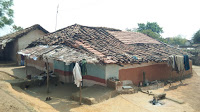
The smooth road passes through quaint villages with old styled terracotta tiles (Chappar) roofs and mud walls. 


Women draw water at hand pumps and children, dogs and cattle loll about in the heat. Less cellphone towers and dish antennas, it could be 19th century India.


The Har Siddi Mata temple is a huge complex which has grown around the small central structure housing the idol of the deity. It is a ecosystem in itself with shops selling  puja items, juice vendors, juice and fruits. Inside, pujaris sit beneath brightly painted walls which advertise rates for conducting marriages and mundans.


Occasional children walk up asking for a rupee. Many are seen loitering around playing cricket or playing the drums at the temple entrance. 


There are posters announcing upcoming pujas, prayer gatherings and Government schemes. The whole place is quite serene and calm and well worth a visit.   
Varansai was always a destination I wanted to visit with family.  Around 400kms from Patna via Bodh Gaya, and considering the roads till we came to the highway it would take us about seven-eight hours. We left early though not really early. It took us four hours to reach the highway. We decided to first go to  Allahabad and then return via Varanasi. The highway was smooth and the drive was enjoyable though all through Bihar there was no decent place to stop for a bite. It was almost night by the time we reached Allahabad. Hungry and tired, we decided to put our trust in the AL Chino café, recommended by Lonely Planet. Thankfully it lived up to its billing and we had a varied and hearty dinner to round off our long day.

The next day we visited the Sangam, one of the holiest sites in India. The sight of the calm river was a delight with the Allahabad Fort as an imposing backdrop. As the boat was rowed slowly, we enjoyed every minute of the ‘chappu’ boat with the new bridge on the river in the background. We slowly crossed the green waters of the Yamuna and approached the Sangam where it merged with the brown waters of the Ganga. It amazed us to see such a clear demarcation of colour in the water. There were quite a few sea gulls too, merrily accepting food from the pilgrims. In fact there were boatmen selling bird food. Sad!


Our boat stood still at the Sangam and we just enjoyed being there with other boats and the gulls. Cold winds caressed us but it was very peaceful to enjoy the meeting of the rivers and see people take a ritual bath in the river, made all the more auspicious as Makarsankranti was just a day away.
Varanasi was a delight and a complete change in character from Allahabad’s colonial past. The rush of humans to the ghats flows through various small and overcrowded lanes. It’s equally interesting to meander through them. Came the boat man with his boat whose opening remarks were that it is not a boat ride but a pilgrimage to see the oldest city of the world created by the God’s over a period of time. It would have taken long but since it was soon going to be time for the evening Arti we planned to do it in a little less time. By the time the ride ended and we had heard all the fables and legends of the ghats and the Gods, it indeed felt like a pilgrimage.


Every bit of mythology was interesting and supported with visual facts. We parked the boat in front of the steps leading to the river, which soon became a parking lot for the river boats,with interesting things happening. I noticed how in the heart of everything we still are environmentally conscious. A young girl selling small cups made of leaves carrying a diya and some marigold flowers hopped nimbly from boat to boat, for sale as offering to the river. My son loved to float the lighted divya in the water and I liked seeing him putting them afloat in water. Since the boats were neck to neck with each other we hopped over the boats to get out of the crowded Ghats before the long Arti got over. Actually having seen the Arti performed live at Haridwar I did not find the Arti here as captivating.


It was interesting to see different ways for people to keep warm in the biting cold with bonfires under uprooted tree!


The tea vendor had an inbuilt chulla with the kettle. A different form of Kangri.
 We walked back through the lanes now with an aim to look at the vendors selling all kinds of stuff ranging from conch shells, rudraksh, tulsi, crystal beads in necklaces and other bric brac including Stoles, Ganga jal, pictures of Gods and Godesses etc. Many local eateries were feeding poor people for charity and they had long queues outside them. After a good dose of chat, puri subzi and lassi we came home with a hangover of being to Varanasi, Kashi, or Banaras as one place is called by different names.

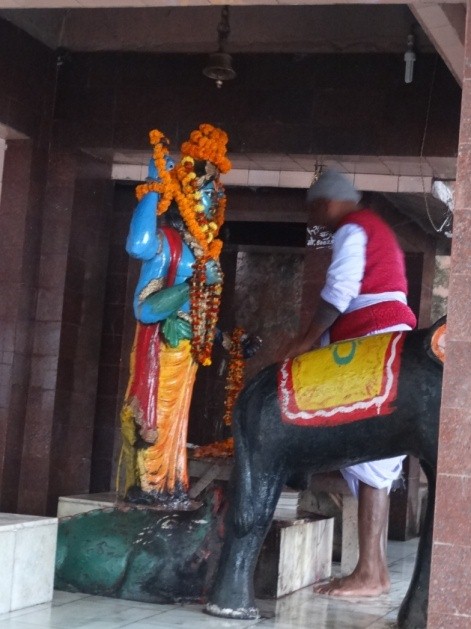
4th Dec 2014 was important for me as I was able to visit the Sonepur Mela which where I really wanted to go while in Bihar. Though it was the last day of the fair and the glitterati of the fair, the elephants, horses and camel would be missing, I still wanted to see the place which was important in mythology and history and I was not disappointed. It is also known as Harihar Kshetra Mela and attracts visitors from all over Asia. Till date, it is the biggest animal fair in Asia and lasts from fifteen days to a month. This ancient fair was where King Chandragupta Maurya used to buy elephants and horses and traders flocked here to procure animals for Imperial stables all over Asia. Sonepur, located at the convergence of the sacred rivers Ganges and Gandak, is a holy site for Hindus. During the fair, people also take a holy dip at the convergence and pay respects at the Hariharnath Temple.
I was fortunate enough to be accompanied by a close relative of the erstwhile Raja who lets out his land for the fair since the British times. This was very enlightening for me as, working on heritage conservation, I got an account and insight of how things were in the past. The Sonepur mela was a place for erstwhile Maharajas to camp here and enjoy animal races, shows and cock fights with winners earning much in terms of pride and prizes. The large tents of the Kings with all facilities were much talked about.


Apart from trade in animals, there were also were enclosures where dances were held. The morning shows were exclusively for the British and the Rajas while the commoners came in later.
The practice of dancing is still followed though it is now crude and vulgar, perhaps reflecting a slice of popular culture. 


Coming to the highlight of the fair, big animals get individual chambers while dogs and birds were all cooped into small cages. People who procure Pedigree dogs at exorbitant rates should come and see how the female dogs are treated. The fair of course was more of a local haat with vendors selling things of daily use and farm equipment. Visiting the fair I got a sense that in terms of farm equipment and farming in general and items related to the farming sector we lag far behind in technology. 
Another eye opener is the low quality products made of cheap plastics and food items which are accessible to a large number of rural households and the effect it will have on their health and the environment.


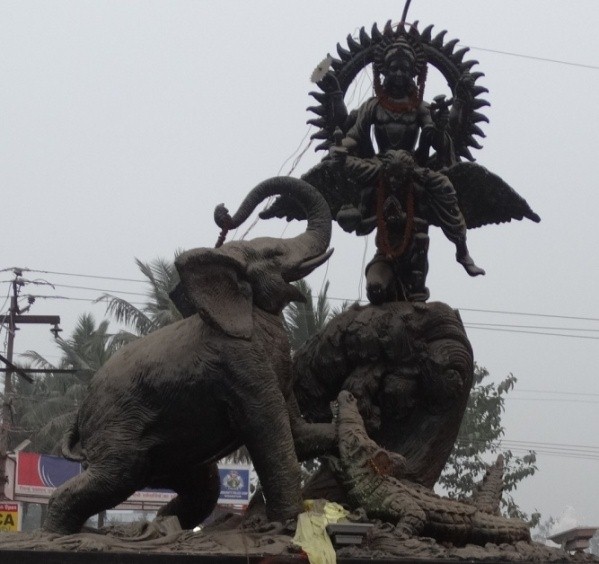
Among the fables associated with the fair, the legend of Gajendhra Moksha is associated with the temple in Sonepur. It involves the story of king Indrayamuna and the Gandharva chief Huhu, who were turned into an elephant and a crocodile respectively by the curse of great sages Agasthya and Dewala muni. One day the elephant's leg was caught by the crocodile. This incident took place in what is now present day Nepal. It is said that both of them fought hard for many years with their herds and while fighting, they came to the place near this temple. But ultimately the King Elephant weakened and took a lotus flower from river in its trunk and prayed to the supreme god Vishnu (Hari) to save him. Vishnu heard his prayer and cut down the crocodile with his Chakra. At the touch of the chakra Huhu was released from the curse. Vishnu also released Indrayamuna from his curse and took him to his abode Vaikuntha. A statue and a temple have been made to commemorate the event.


At one time the rule of the kings of Nepal kings extended upto the left bank of the river Gandhak at Sonepur and the remains of an old cantonment with a market still exists.


Seeing the largest animal fair of the world was a lifetime experience for me. Today, the Sonepur fair allows one to get a glimpse of rural life and see animals like elephants and camels and various other activities. No wonder the fair is a big draw for Indians and many foreign tourists even today. 

Copyright © 2013 Anjali Bharthari Ravi
Developed By Techbolt™